


Introduction
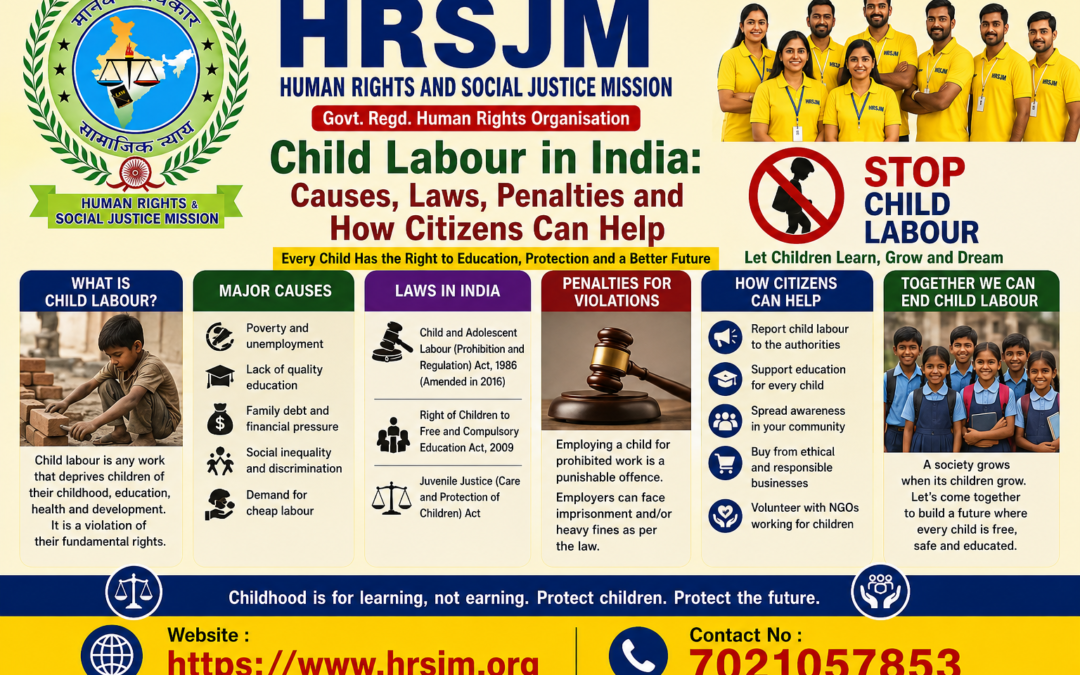
Children are the foundation of every nation’s future. They deserve a safe childhood, quality education, good health, and opportunities to grow with dignity. Unfortunately, thousands of children in India are still engaged in labour that deprives them of education, safety, and a healthy childhood. Child labour is not only a social issue but also a serious violation of human rights.
Despite economic growth and stronger legal protections, child labour continues to exist in various sectors due to poverty, lack of awareness, limited access to education, and social inequalities. Addressing this issue requires collective action from governments, communities, employers, families, educational institutions, and responsible citizens.
This guide explains the major causes of Child Labour in India, the laws that prohibit it, the penalties for violations, and practical ways every citizen can contribute to protecting children’s rights.
What is Child Labour?Human Rights Awareness
Child labour refers to work that is harmful to a child’s physical, mental, emotional, or educational development. It prevents children from attending school regularly, exposes them to unsafe conditions, and limits their future opportunities.
Not every activity performed by children is considered child labour. Age-appropriate household responsibilities or supervised skill development that does not interfere with education and well-being are different from exploitative labour. The concern arises when children are employed in hazardous, exploitative, or full-time work that compromises their rights.
Major Causes of Child Labour in India
Child labour is often the result of multiple social and economic factors working together.
1. Poverty
Financial hardship remains one of the primary reasons why families depend on children’s income for survival.
2. Lack of Quality Education
When education is inaccessible, expensive, or perceived as having limited value, children are more likely to enter the workforce at an early age.
3. Social Inequality
Marginalized communities often face limited access to employment, education, and social welfare, increasing the risk of child labour.
4. Family Circumstances
Migration, family debt, illness, or the loss of a primary earning member may force children to work.
5. Demand for Cheap Labour
Some industries prefer employing children because they can be paid lower wages and may be less likely to report exploitation.
Sectors Where Child Labour is Common
Although significant progress has been made, child labour can still be found in several sectors, including:
- Agriculture
- Small manufacturing units
- Domestic work
- Street vending
- Brick kilns
- Garment and textile production
- Hospitality and food services
- Informal workshops
Children working in hazardous environments face greater risks of injury, illness, and long-term health problems.
Child Labour Laws in India
India has introduced several legal measures to protect children from exploitation and ensure their right to education and development.
Child and Adolescent Labour (Prohibition and Regulation) Act, 1986 (Amended in 2016)
This law prohibits the employment of children below the age of 14 years in occupations and regulates the employment of adolescents in hazardous occupations and processes.
Right of Children to Free and Compulsory Education Act, 2009
The Right to Education (RTE) Act guarantees free and compulsory education for children between 6 and 14 years of age, helping reduce the risk of child labour.
Juvenile Justice (Care and Protection of Children) Act
This legislation provides protection, rehabilitation, and care for children who are vulnerable, neglected, or exploited.
These laws reflect India’s commitment to safeguarding children’s rights and promoting their overall well-being.
Penalties for Employing Child Labour
Employers who violate child labour laws may face serious legal consequences, including fines and imprisonment, depending on the nature and severity of the offence.
Authorities can also take action against individuals or organizations involved in child exploitation, trafficking, or hazardous employment of children. Strong enforcement of these laws plays an important role in discouraging illegal employment practices and protecting children’s rights.
Impact of Child Labour on Children and Society
Child labour affects not only individual children but also the long-term development of society.
Interrupted Education
Children who work often miss school or drop out completely, reducing future employment opportunities.
Physical and Mental Health Risks
Hazardous work environments expose children to injuries, stress, and long-term health issues.
Cycle of Poverty
Without education and skills, children are more likely to remain in low-income employment as adults, continuing the cycle of poverty.
Loss of Human Potential
Every child denied education represents lost talent, innovation, and future leadership for the nation.
How Citizens Can Help Prevent Child Labour
Ending child labour requires active participation from every member of society.
Promote Education
Encourage families to enroll children in school and support educational initiatives in your community.
Report Child Labour
If you witness child labour or suspect exploitation, report it to the appropriate authorities or child protection agencies.
Support Ethical Businesses
Choose products and services from organizations that follow ethical labour practices and respect children’s rights.
Raise Awareness
Share accurate information about child rights through schools, workplaces, social media, and community programs.
Volunteer with Human Rights Organizations
Participating in awareness campaigns and community outreach programs can help create lasting change.
The Role of Human Rights Organizations
Human rights organizations play a vital role in protecting children by:
- Promoting child rights awareness
- Supporting rescue and rehabilitation efforts
- Encouraging access to education
- Collaborating with communities and institutions
- Advocating for stronger implementation of child protection laws
Through education, advocacy, and public engagement, these organizations help build a society where every child can live with dignity, safety, and equal opportunities.
Conclusion
Child labour is a challenge that demands continuous awareness, responsible action, and collective commitment. Every child has the right to education, protection, health, and a safe childhood. Eliminating child labour requires stronger law enforcement, improved access to education, economic support for vulnerable families, and active participation from citizens.
By understanding Child Labour in India, supporting child protection initiatives, and reporting exploitation whenever it occurs, we can contribute to creating a future where every child has the opportunity to learn, grow, and achieve their full potential. Protecting children is not only a legal responsibility—it is a shared commitment to human dignity and social justice.