


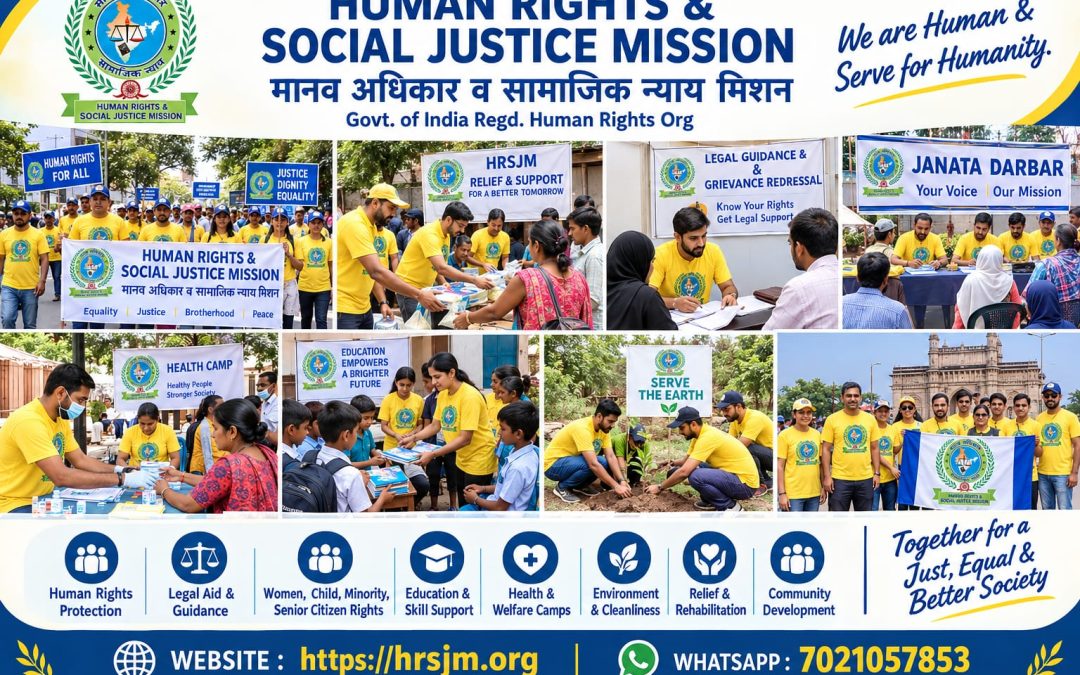
India’s Constitution guarantees fundamental rights such as equality before the law, freedom of speech and expression, the right to education, and protection from discrimination. These principles form the foundation of the country’s ongoing Human Rights & Social Justice Mission—an effort involving government bodies, institutions like the National Human Rights Commission (NHRC), registered organizations such as the Human Rights and Social Justice Mission (HRSJM), and citizens working to turn constitutional ideals into everyday reality.
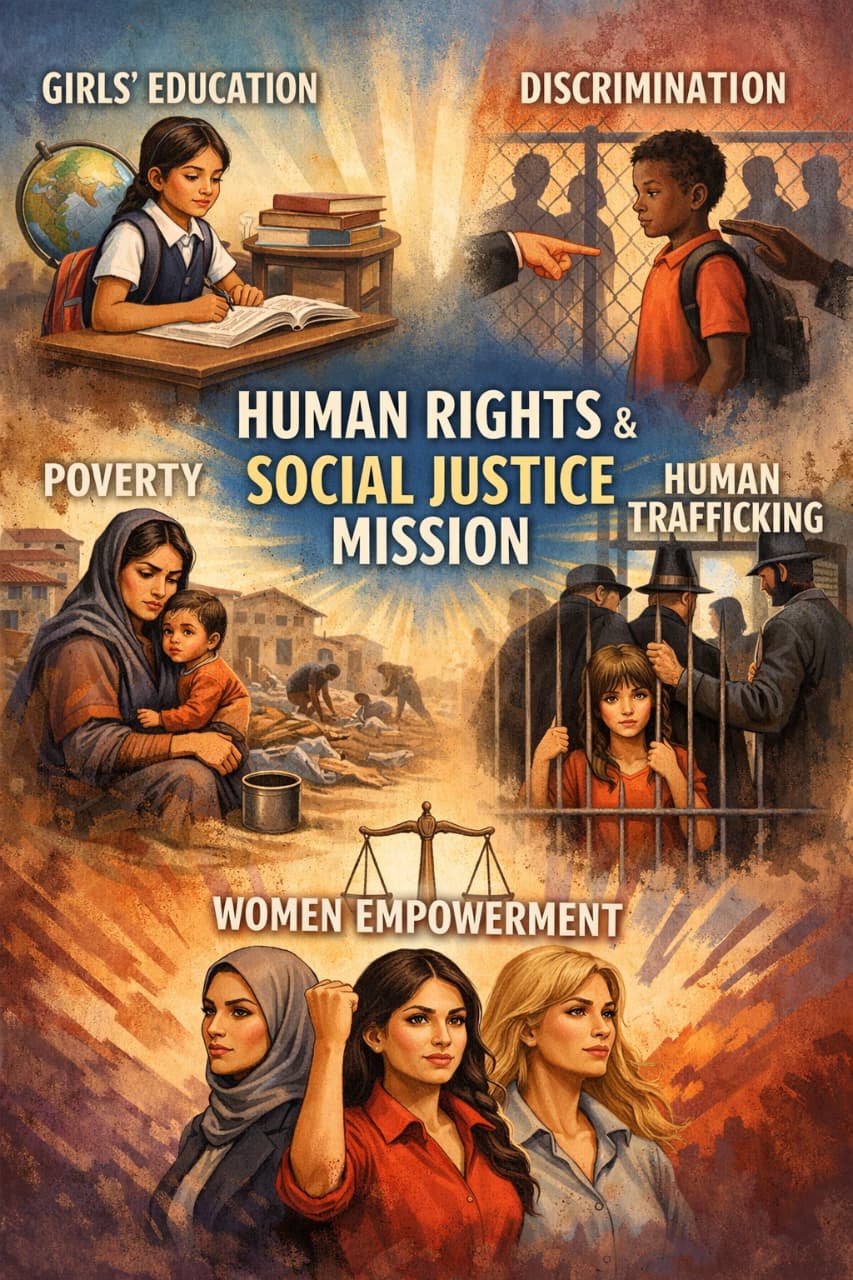
CURRENT CHALLENGES AND FOCUS AREAS
As of mid-October 2026, several issues remain central to this mission: Electoral integrity and the right to vote: A nationwide Special Intensive Revision (SIR) of electoral rolls has removed a large number of names (reports cite over 130 million). Critics, including civil society groups and opposition voices, have raised concerns about transparency, possible mass disenfranchisement affecting marginalized communities, women, and people in poverty, and the need for clear, accessible processes for appeals. Protests calling for electoral reforms and accountability have taken place in Delhi and other cities. Authorities have responded with detentions, movement restrictions, and temporary internet suspensions. International observers, including the UN human rights office and groups such as Human Rights Watch and Amnesty International, have urged respect for peaceful assembly and due process, while the government has emphasized its constitutional framework and internal democratic mechanisms.
Protection of vulnerable groups: The Chief Justice of India recently stressed at the NHRC’s 33rd Foundation Day that human rights institutions must reach those least able to raise their voices—under trial prisoners, migrant workers, elderly people, persons with disabilities, and others facing barriers. Issues such as bonded labour, industrial health risks, and access to basic services continue to require attention.
Education, Empowerment, And Equality: Organizations like HRSJM focus on spreading awareness of constitutional rights (including rights of women, minorities, children, senior citizens, and workers), supporting education for underprivileged children, and promoting dignity and security for all. Broader government efforts include expanding social protection coverage, rural livelihoods programs that organize millions of women into self-help groups, financial inclusion, and schemes for health, nutrition, and disability support.
Civil Space And Institutional Responsiveness: Reports note ongoing debates around civic freedoms, media, and the role of independent institutions. At the same time, bodies such as the NHRC and courts continue to address individual grievances and systemic issues.
The Role of Missions and Everyday Action: The Human Rights & Social Justice Mission (HRSJM), a government-registered organization with a large network of volunteers, works on education and empowerment, equality and security, community outreach, and awareness of rights such as the Right to Information and labour rights. Its stated approach emphasizes contribution, peace, and harmony across communities.
Government ministries, including the Ministry of Social Justice and Empowerment, run campaigns on cleanliness, grievance redressal, e-waste management, and targeted support for scheduled castes, tribes, other backward classes, persons with disabilities, and other groups. Broader initiatives highlight “Sabka Saath, Sabka Vikas” (together with all, development for all) and seek inclusive growth.
These efforts matter because human rights are not only about preventing harm—they are about ensuring every person, especially children and young people, has the chance to learn, participate, and live with dignity. Progress depends on awareness, fair processes, and institutions that listen to those who are hardest to hear.
Young citizens can contribute by learning about the Constitution, supporting education and community service, and practicing respect and fairness in daily life. Social justice advances when rights are understood, protected, and extended to everyone. India’s diversity is a strength. Sustained work by institutions, organizations, and citizens continues to shape a more equitable society grounded in constitutional values.