


Introduction
Every worker deserves to be treated with dignity, fairness, and respect. Whether employed in a factory, office, construction site, retail store, healthcare facility, or the gig economy, workers contribute significantly to India’s economic growth. Protecting their rights is essential not only for individual well-being but also for creating a productive and equitable society.
Labour Rights in India are designed to ensure fair wages, safe working conditions, equal opportunities, and protection against exploitation. These rights are supported by constitutional principles and labour laws that aim to balance the interests of employees and employers while promoting social justice.
Despite these legal protections, many workers remain unaware of their rights. Lack of awareness often leads to unfair wages, unsafe workplaces, discrimination, excessive working hours, and denial of employee benefits. Understanding labour rights empowers workers to make informed decisions and seek appropriate legal remedies when necessary.
This guide explains the key labour rights available in India, the major labour laws, employer responsibilities, and practical steps every worker should know to protect themselves.
What Are Labour Rights?
Labour rights are legal protections that safeguard employees’ interests at the workplace. They establish minimum standards for wages, working conditions, health and safety, equality, social security, and grievance redressal.
These rights apply across different industries and encourage workplaces where employees can work safely, fairly, and with dignity.
Labour rights also promote productivity by ensuring that workers receive proper compensation, rest, and protection from discrimination or exploitation.
Why Labour Rights Matter
Strong labour protections benefit both employees and employers.
They help to:
- Promote fair and equal treatment
- Prevent workplace exploitation
- Improve employee health and safety
- Increase productivity and job satisfaction
- Reduce workplace disputes
- Strengthen economic development
- Encourage ethical business practices
When workers understand their rights, they are better equipped to contribute positively to the workplace and society.
Fundamental Labour Rights Every Worker Should Know
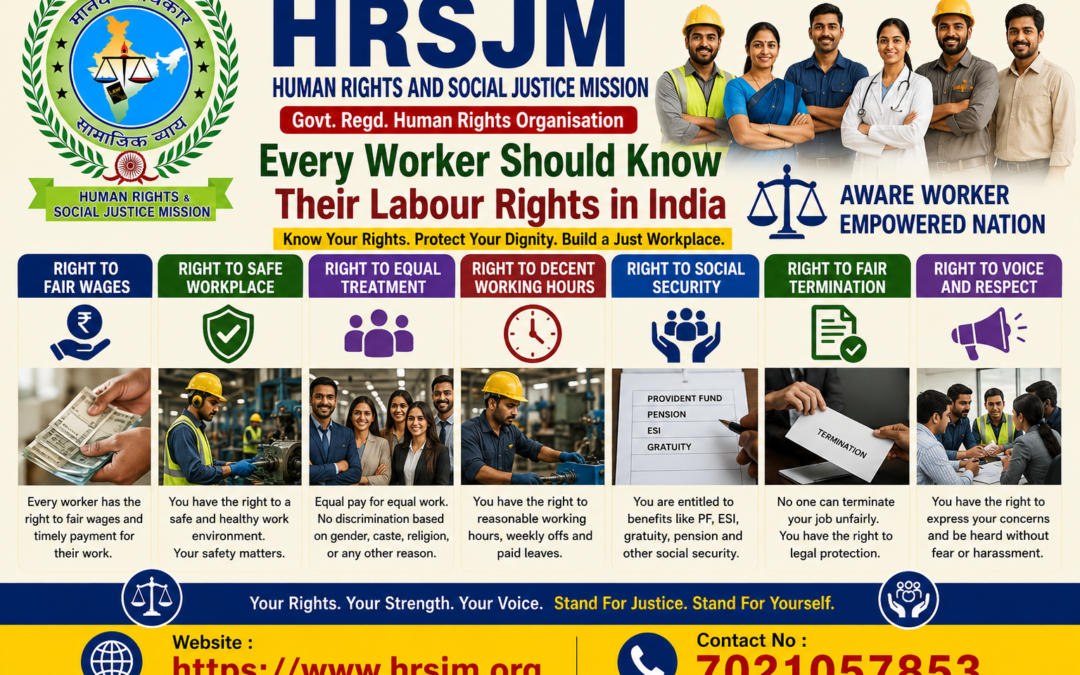
1. Right to Fair Wages
Every worker has the right to receive wages as prescribed under applicable labour laws. Employers are expected to pay wages on time and ensure that employees receive fair compensation for their work.
2. Right to a Safe Workplace
Employers are responsible for maintaining safe and healthy working conditions.
This includes:
- Safe equipment
- Fire safety measures
- Protective gear
- Clean drinking water
- Sanitation facilities
- Emergency preparedness
A safe workplace reduces accidents and protects workers’ physical and mental well-being.
3. Right Against Workplace Discrimination
Employees should not face discrimination based on gender, religion, caste, disability, age, or other protected characteristics.
Equal opportunity promotes diversity, inclusion, and respect within organizations.
4. Right to Reasonable Working Hours
Healthy work-life balance is essential for employee well-being.
Workers are entitled to reasonable working hours, weekly rest, and applicable leave benefits as provided under labour regulations and employment policies.
5. Right to Equal Pay
Employees performing similar work should receive equal remuneration without discrimination.
Equal pay promotes fairness and supports gender equality in the workplace.
6. Right to Social Security Benefits
Eligible workers may receive various social security protections depending on applicable laws and employment conditions.
These benefits can include:
- Provident Fund (PF)
- Employee State Insurance (ESI)
- Maternity benefits
- Gratuity
- Pension benefits
These protections provide financial security during illness, retirement, or other life events.
Major Labour Laws in India
India has modernized its labour framework by introducing labour codes that simplify and consolidate various labour regulations.
Some of the important legal areas include:
Code on Wages
Provides a framework for wage-related matters, including minimum wages and timely payment.
Industrial Relations Code
Focuses on employer-employee relations, dispute resolution, and industrial harmony.
Occupational Safety, Health and Working Conditions Code
Establishes standards for workplace safety, health, and welfare.
Code on Social Security
Strengthens social security coverage for eligible employees across different sectors.
Together, these laws aim to create safer, fairer, and more transparent workplaces.
Employer Responsibilities
Employers play a key role in protecting labour rights.
Their responsibilities include:
- Paying wages on time
- Providing safe working conditions
- Preventing workplace harassment
- Maintaining equal employment opportunities
- Following labour laws
- Offering statutory employee benefits where applicable
- Addressing employee grievances fairly
Responsible employers build trust, improve retention, and contribute to sustainable business growth.
Common Workplace Challenges
Despite legal protections, workers may still experience:
- Delayed salary payments
- Unsafe work environments
- Excessive working hours
- Workplace harassment
- Discrimination
- Unfair termination
- Denial of statutory benefits
Recognizing these issues is the first step toward seeking appropriate assistance and resolution.
How Workers Can Protect Their Rights
Workers can strengthen their legal protection by following a few practical steps.
Know Your Employment Terms
Carefully read your appointment letter or employment contract before accepting a job.
Maintain Employment Records
Keep copies of salary slips, attendance records, contracts, and official communication.
Report Workplace Issues
Raise concerns through the employer’s grievance mechanism whenever possible.
Stay Informed
Understanding labour laws helps workers identify unfair practices and seek timely support.
Seek Legal Guidance
When disputes cannot be resolved internally, workers may seek advice from legal professionals or appropriate labour authorities.
The Role of Human Rights Organizations
Human rights organizations contribute significantly to protecting labour rights by:
- Promoting awareness of workers’ rights
- Supporting vulnerable workers
- Conducting legal awareness programs
- Encouraging safe and ethical workplaces
- Advocating for equal treatment and dignity
- Assisting with human rights education
Organizations such as HRSJM help strengthen awareness and encourage citizens to understand and respect workplace rights.
Building Fair and Respectful Workplaces
A healthy workplace is built on mutual respect, transparency, equality, and accountability. Employees who feel safe and valued are more motivated, productive, and committed to organizational success.
Governments, employers, workers, educational institutions, and civil society all share responsibility for creating workplaces that uphold human dignity and labour rights.
When labour rights are respected, businesses grow responsibly, employees thrive, and society becomes more inclusive and equitable.
Conclusion
Labour Rights in India are fundamental to ensuring fairness, dignity, and security for every worker. From fair wages and safe workplaces to equal opportunities and social security, these protections help create a balanced relationship between employers and employees.
Awareness is the first step toward empowerment. By understanding workplace rights, fulfilling responsibilities, and promoting ethical employment practices, workers and employers can together build a stronger, safer, and more inclusive workforce.
Protecting labour rights is not only a legal obligation—it is a commitment to human dignity, economic progress, and social justice.